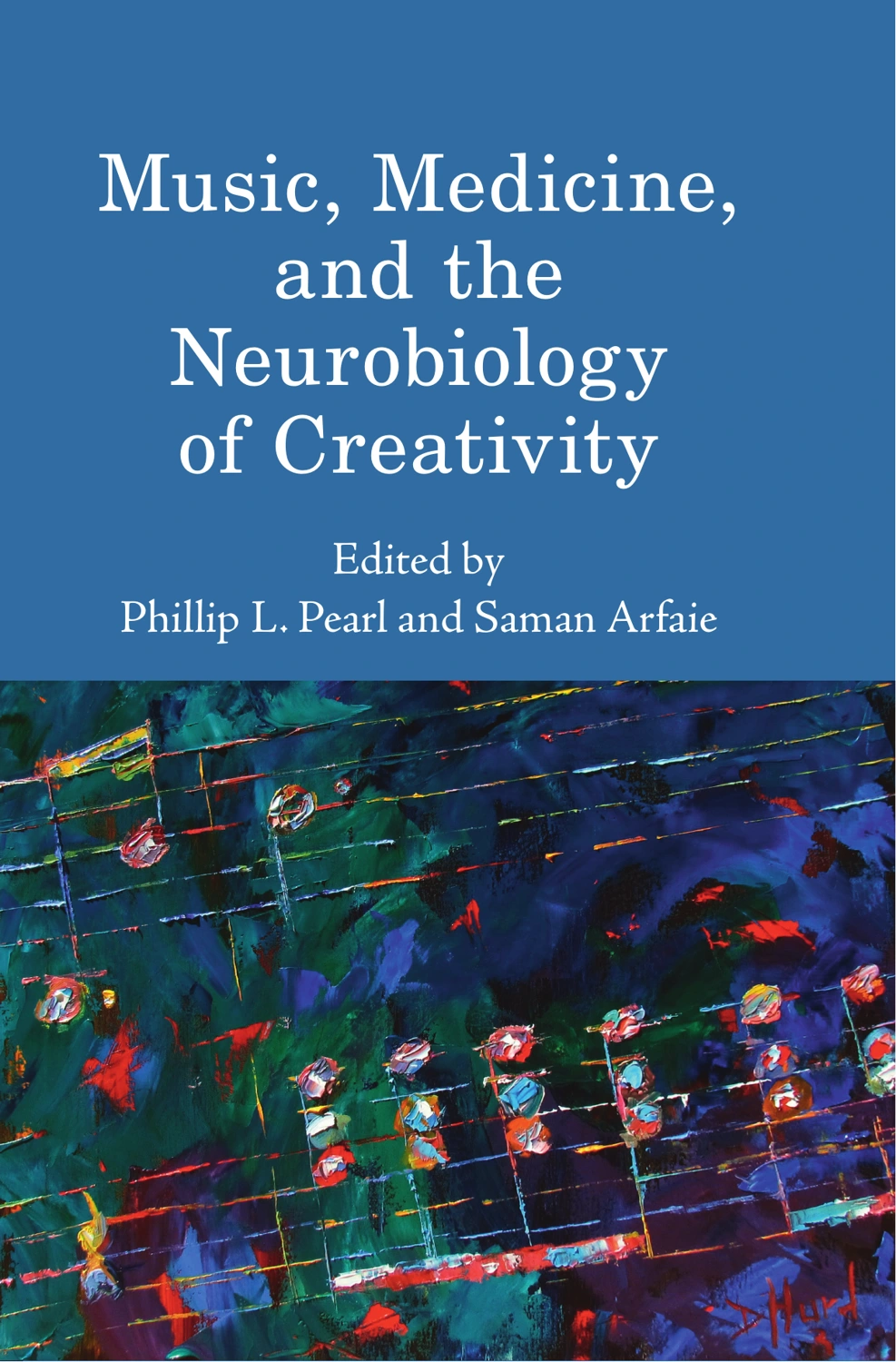
Music moves through the brain, the body, and the stories we tell about ourselves.
This interdisciplinary volume brings physicians, psychologists, neuroscientists, and musicians into conversation. It explores how the brain perceives and creates music, how illness changes artistic expression, and how the arts can become part of clinical care.
From auditory-motor interactions and the genetics of musicality to epilepsy, dementia, poetry, and narrative medicine, the chapters connect biological inquiry with lived experience. Medical portraits of Mozart, Beethoven, the Schumanns, Ravel, Shostakovich, Smetana, and the masters of jazz illuminate the lives behind the music.
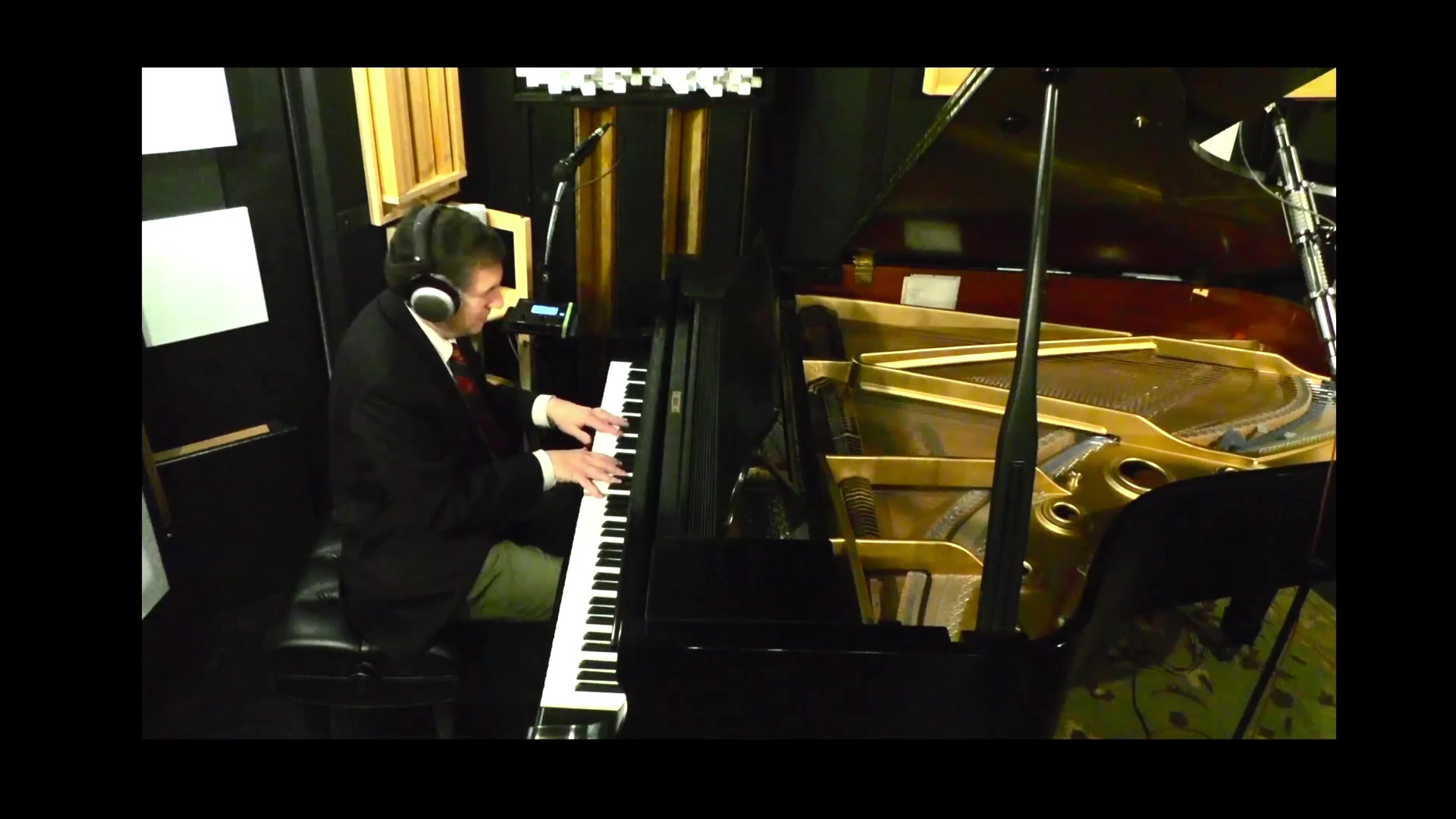
Accompanying studio recordings by the volume editors carry the inquiry from the written page into sound.
25CHAPTERS
6PARTS
33CONTRIBUTORS
356PAGES
THE LISTENING ROOM
Give the music your time.
Franz Schubert Piano Sonata in B-flat major, D.960
Written in the final year of Schubert’s life, this sonata offers a space for sustained attention. Its long melodic lines, interruptions, and returns invite us to hear memory and change within musical form.
Listen as you explore, or stay with the music. David H. Porter, piano. This listening selection is separate from the volume editors’ accompanying recordings.
FOUR MOVEMENTS · 36 MINUTES
THE EDITORS
Meet the editors
HARVARD UNIVERSITY
Phillip L. Pearl
MD, FAES, FACNS
Director of Epilepsy and Clinical Neurophysiology | Boston Children’s HospitalWilliam G. Lennox Chair and Professor of Neurology | Harvard Medical SchoolMember | Music and Health Institute, Berklee College of Music
Harvard Medical School · Boston Children’s Hospital
Neurologist, researcher, and musician. William G. Lennox Chair and Professor of Neurology.
Neurology Resident Physician | McGill University Health Centre (MUHC)MSc Candidate, Integrated Program in Neuroscience | McGill University, Montreal Neurological Institute (The Neuro)
McGill University · University of California, Berkeley
Meet the clinicians, scientists, musicians, and scholars behind the volume.
THE PHYSICIAN–MUSICIAN
Professor Phillip L. Pearl
Director of Epilepsy and Clinical Neurophysiology, Boston Children’s Hospital William G. Lennox Chair and Professor of Neurology, Harvard Medical School
Music has remained a second professional life alongside Professor Pearl’s work in child neurology. He attended the Peabody Conservatory of Music in Baltimore, where his major was percussion, and performs on jazz piano, vibraphone, and drums.
He is involved in the Music and Health Institute at Berklee College of Music and previously held an appointment as Professor of Music alongside Neurology and Pediatrics at George Washington University. His musical recordings include two CDs; the first debuted at Washington’s Blues Alley and supported care for children in need.
THE PHYSICIAN & PIANIST
Dr. Saman Arfaie
Dr. Saman Arfaie is a neurology resident physician and scientist for whom music takes a central role in both intellectual inquiry and creative life. His musical studies include training with Tatiana Dardykina, Jui Sheng Li, and Dane Ko, alongside musicology at the University of California, Berkeley. His performances and writing explore how attentive listening can deepen our understanding of illness, creativity, and the inner life.
MAY 3, 2026 · AMERICAN OSLER SOCIETY · TORONTO
Echoes of Time & Memory: The Late Piano Works of Schubert
A lecture-recital exploring memory, musical time, and human experience through Schubert’s late piano works.
NOVEMBER 2021 · TEDxMcGILL
Illuminating the Human JourneyMusic, Medicine, and Meaning
Through Chopin’s Nocturne in C minor, Op. 48, No. 1, Dr. Saman Arfaie brings medicine, neurosurgery, brain tumour biology, and philosophy into dialogue with performance. He considers suffering, personal transformation, and the insights that art offers when questions extend beyond the reach of a single answer.
Filmed and edited by TVM, Student Television at McGill.
THE GREAT AMERICAN SONGBOOK & JAZZ
Recordings
Performances by
Accompanying resources for the volume, including selections listed in its Appendix: Links to Music Recordings. These performances accompany Pearl’s presentations on the Great American Songbook and jazz, developed with faculty collaborators.
The American songbook
George Gershwin
Embraceable You
Written for Girl Crazy (1930), this George and Ira Gershwin song grew from Broadway into a jazz standard. Its sustained melodic line invites a pianist to make a sung phrase audible through touch, pacing, and the release of each note.
George Gershwin
A Foggy Day
From the Gershwins’ film score for A Damsel in Distress (1937), the song turns an unpromising London day into a scene of romantic possibility. Its buoyant melody makes an illuminating contrast with the more spacious ballads in this collection.
George Gershwin
Our Love Is Here to Stay
Written for The Goldwyn Follies, this late Gershwin song carries an additional poignancy: Ira completed the verse’s lyrics after George’s death. The piano gives its promise of continuity a voice through recurring melodic phrases and gently unfolding harmony.
Cole Porter
What Is This Thing Called Love?
Porter makes the title’s question into a musical argument: short, insistent phrases are answered by a contrasting middle section. The pianist can keep that questioning character alive while following the harmonic changes into fresh melodic possibilities.
Cole Porter
Night and Day
Porter’s melody circles back to repeated notes and persistent rhythmic figures, making desire sound almost inescapable. Listen for how the pianist distinguishes those repetitions through voicing, harmonic colour, and shifts in emphasis rather than simply repeating the same gesture.
Cole Porter
All of You
The song’s compact phrases give Porter’s wit a musical counterpart. In a piano interpretation, the melody can remain crisp and conversational while the accompaniment introduces unexpected accents, countermelodies, and harmonic shades.
The language of bebop
Charlie Parker
Yardbird Suite
Parker’s tune shows how bebop can make a composed melody sound like improvisation: phrases turn rapidly, accents move across the beat, and lines press toward the next harmonic change. At the piano, those saxophone-like gestures become a conversation between the hands.
Charlie Parker
Yardbird Suite · Excerpt
This shorter selection isolates the quick melodic turns and displaced accents of Parker’s tune. Compare it with the longer recording to hear how a brief phrase belongs to a larger harmonic journey.
Charlie Parker
Ornithology
Parker’s long, airborne melodic lines demand both precision and flexibility. Listen for the difference between the steady underlying pulse and the solo line’s changing accents, and for the way a melodic fragment can be extended through successive harmonic changes.
Bud Powell
Bouncing with Bud
Powell’s bebop piano language gives the right hand the agility of a horn while the left hand supplies compact harmonic punctuation. This piece makes their independence audible: the melody travels quickly while the accompaniment selects moments that sharpen its rhythmic profile.
Distinctive voices in jazz
Thelonious Monk
’Round Midnight
Monk’s ballad is built from expressive intervals, chromatic tension, and phrase endings that resist easy resolution. Rests and sustained notes are part of its architecture; a piano interpretation must decide not only how to sound each harmony, but how long to let it remain.
Charles Mingus
Nostalgia in Times Square
Mingus combines a memorable, blues-inflected theme with a sense of urban movement. The recurring melody acts as an anchor while rhythm, register, and improvised detail change around it, keeping recollection and forward motion in play.
Studio recordings
Cole Porter
Night and Day
This studio version returns to Porter’s repeated melodic gestures and persistent pulse. Compare its phrasing and balance between the hands with the video interpretation: a familiar song can acquire a different character through small decisions of timing and touch.
Cole Porter
What Is This Thing Called Love?
In this studio interpretation, Porter’s musical question becomes material for development rather than a fixed statement. Compare the placement of accents, the space between phrases, and the treatment of the contrasting middle section with the accompanying video.
Academic homes, formative institutions, and the publisher behind the volume.
24UNIVERSITIES & COLLEGES
5COUNTRIES
4CONTINENTS
Cartography: Natural Earth · Locations shown at campus or city scale.
THE PUBLISHER
Stephen Acerra
Publisher · Cambridge University Press
Commissioning for psychology, creativity, neuroscience, and mental health.
ADVANCE PRAISE
In distinguished company.
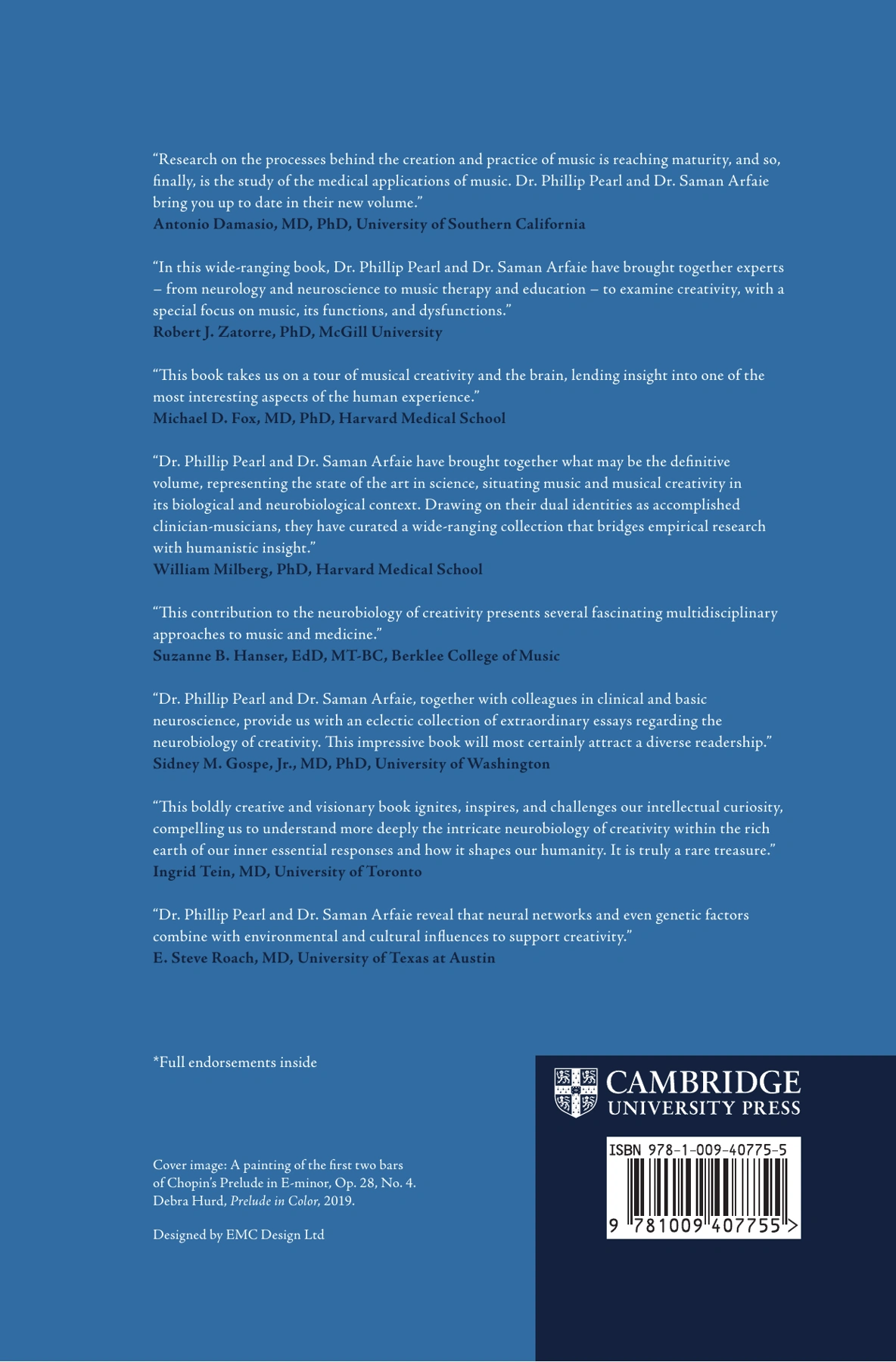
“Research on the processes behind the creation and practice of music is reaching maturity, and so, finally, is the study of the medical applications of music. Dr. Phillip Pearl and Dr. Saman Arfaie bring you up to date in their new volume.”
Antonio DamasioMD, PhD
University Professor; David Dornsife Chair in Neuroscience; Professor of Psychology, Philosophy, and Neurology; Director, Brain and Creativity Institute
University of Southern California
READERS & DISCIPLINES
From the concert hall to the clinic
Choose a path through the volume that speaks to your questions.
FOR MUSIC LOVERS & CULTURAL READERS
The lives behind the music
Hear familiar works with a different understanding of their creators. Medical portraits revisit Beethoven’s deafness, Ravel’s neurological illness, the Schumanns, Smetana, and the masters of jazz, examining how illness intersects with artistic life.
Bring music into neurological discussion with evidence and care. Explore musicogenic seizures, musical hallucinations, interventions for neurocognitive disorders, and research on Mozart’s K.448 in epilepsy, attending to the limits as well as the possibilities of the evidence.
Connect musical experience with mechanisms of perception and creativity. Chapters on auditory-motor interactions, musicality, rhythm, and creative networks offer foundations for interdisciplinary research and informed musical practice.
Teach the relationship between biological explanation and lived experience. Poetry, children’s artwork, and narrative medicine create starting points for reflection on empathy, interpretation, resilience, and the responsibilities of clinical care.
Suggested reading pathways for medical humanities, music cognition, and neurology training. These can be used in a seminar, residency teaching session, or interdisciplinary reading group.
MEDICAL HUMANITIES & NARRATIVE MEDICINE
Illness, interpretation, and care
Suggested readings: Beethoven and Ravel’s medical portraits, children’s artwork, poetry, and narrative reflective practice.
Learning focus: distinguish clinical evidence from retrospective interpretation, examine patients’ expressions of illness, and develop a reflective response to a case or performance.
Learning focus: connect musical phenomena to proposed neural mechanisms, compare methods, and formulate a testable question without treating correlation as causation.
Suggested readings: neurocognitive disorders, musicogenic seizures, musical hallucinations, Mozart’s K.448, and music processing across the lifespan.
Learning focus: appraise study design and outcomes, discuss appropriate clinical applications, and identify where therapeutic claims exceed the available evidence.
Review the volume for your teaching, or help make it available to your institution.
Considering the volume for your course?
Pair a chapter with a recording, a focused discussion, and a short critical or reflective assignment. Medical humanities programs, Osler societies, narrative medicine groups, and residency educators can adapt these pathways to their audiences.
On Cambridge Core, use “Get access” and “Recommend to your librarian” where available through your institution. You can also send the recommendation below directly to your library.
Copy a library recommendation
I recommend that our library acquire Music, Medicine, and the Neurobiology of Creativity, edited by Phillip L. Pearl and Saman Arfaie (Cambridge University Press, 2026). The volume supports teaching and research in music cognition, neuroscience, neurology, and medical humanities. Hardback ISBN: 9781009407755. Paperback ISBN: 9781009407779. Digital ISBN: 9781009407786. Publisher listing: https://www.cambridge.org/core/books/music-medicine-and-the-neurobiology-of-creativity/7A2DBFCA4DEFE2586E26F23075A8B9A2
OWN THE VOLUME
Purchase the book
Music, Medicine, and the Neurobiology of Creativity Edited by Phillip L. Pearl and Saman Arfaie
HARDBACKUSD $126.50CAD $131.95ISBN 9781009407755
PAPERBACKUSD $41.80CAD $43.95ISBN 9781009407779
DIGITALCambridge CoreISBN 9781009407786
October 2026 · 356 pages · 25 chapters
USD prices: Bookshop.org. CAD prices: Amazon Canada. Prices dated 11 October 2026; prices, taxes, and shipping may vary by retailer.
HARDBACK ISBN 9781009407755 · PAPERBACK ISBN 9781009407779
FOR YOUR NEXT PAPER
Cite this book
Choose a style and copy the complete reference.
APA
Pearl, P. L., & Arfaie, S. (Eds.). (2026). Music, medicine, and the neurobiology of creativity. Cambridge University Press. https://doi.org/10.1017/9781009407786
AMA
Pearl PL, Arfaie S, eds. Music, Medicine, and the Neurobiology of Creativity. Cambridge University Press; 2026. doi:10.1017/9781009407786
Vancouver
Pearl PL, Arfaie S, editors. Music, medicine, and the neurobiology of creativity. Cambridge: Cambridge University Press; 2026. doi:10.1017/9781009407786.
Chicago
Pearl, Phillip L., and Saman Arfaie, eds. Music, Medicine, and the Neurobiology of Creativity. Cambridge University Press, 2026. https://doi.org/10.1017/9781009407786.
BibTeX
@book{pearl_arfaie_2026,
  editor = {Pearl, Phillip L. and Arfaie, Saman},
  title = {Music, Medicine, and the Neurobiology of Creativity},
  publisher = {Cambridge University Press},
  year = {2026},
  doi = {10.1017/9781009407786},
  isbn = {9781009407755},
  url = {https://doi.org/10.1017/9781009407786}
}
Harvard
Pearl, P.L. and Arfaie, S. (eds.) (2026) Music, Medicine, and the Neurobiology of Creativity. Cambridge: Cambridge University Press. doi:10.1017/9781009407786.
PRESS & EVENTS
The next chapter
Launches, lectures, podcasts, and reviews will be collected here as they are announced. Sign up for occasional updates or contact the editors.